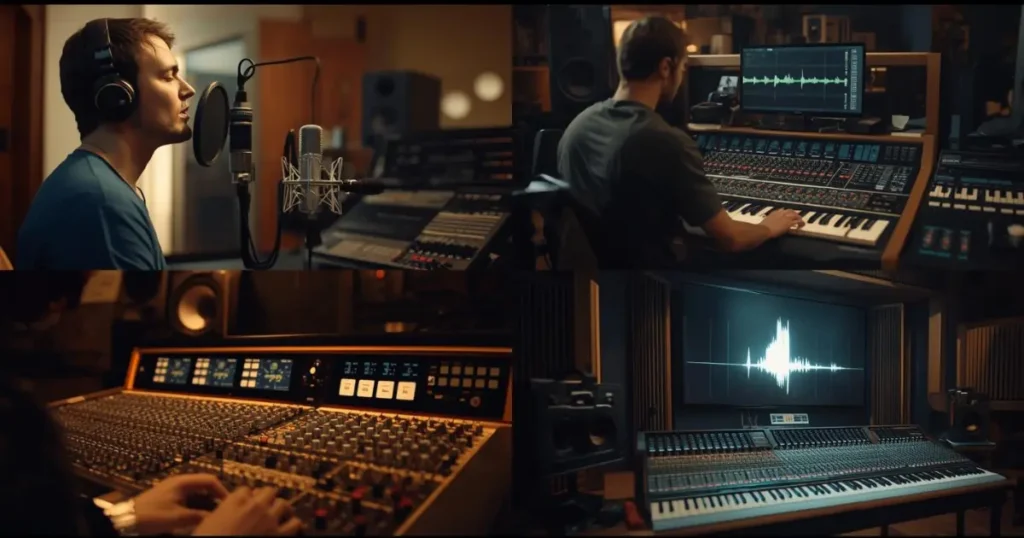
Searching for ‘Song Recording Process‘ is well work as an artist. And walking into a professional recording studio for the first time feels like stepping onto a movie set. The dim lights, the smell of soundproofing foam, and the intimidating gleam of high-end microphones create an atmosphere where magic is expected to happen. But behind every hit song you hear on Spotify or YouTube lies a meticulous, disciplined, and highly technical journey.
Whether you are an aspiring indie artist in Rajasthan or a seasoned performer looking for the best music studio in Jaipur, understanding the song recording process is the first step toward sonic excellence. At Neetara Production, we’ve spent years refining this workflow, helping artists transform their humming voice memos into polished masterpieces.
In this guide, we break down the six essential stages of recording a song, revealing the industry secrets that separate a “home demo” from a “professional production.”
Phase 1: Pre-Production In Recording Song– The Architect’s Blueprint
Many artists believe the song recording process begins the moment they stand in front of a microphone. This is a common misconception. In reality, the most successful records are won or lost before the “Record” button is even pressed.
1.1 Songwriting and Arrangement
Before booking a session at Neetara Production, you need a solid foundation. This involves finalizing your lyrics, melody, and structure (Intro, Verse, Chorus, Bridge, etc.). Ask yourself: Does the bridge add emotional value? Is the chorus catchy enough? A professional producer often helps refine the arrangement to ensure the song flows naturally.
1.2 The Power of the Demo
You don’t need a high-tech setup for this. A simple phone recording of you singing with a guitar or piano is enough. This “scratch track” serves as a reference for the audio engineer. It helps our team at Neetara Production understand the tempo, the key, and the vibe you’re aiming for.
1.3 Rehearsal (The “Time is Money” Rule)
In a professional studio, efficiency is key. Every hour you spend practicing at home saves you money and stress in the booth. Ensure you can perform your song flawlessly to a click track (metronome). If you’re struggling with the rhythm during practice, it will only become more apparent under the microscope of studio-grade equipment.
Phase 2: The Setup – Proceding for Song Recording
When you arrive at Neetara Production in Jaipur, the first thing you’ll notice is the intentionality of our space. The song recording process relies heavily on physics—specifically, how sound waves interact with the room.
2.1 Acoustic Treatment
A great recording isn’t just about the mic; it’s about the room. Our studio features precision-engineered acoustic treatment to eliminate “flutter echoes” and “standing waves.” This ensures that the sound captured is “dry” and “clean,” providing a blank canvas for the mixing stage.
2.2 Selecting the Right Microphone
Not all microphones are created equal. For a soulful ballad, we might choose a large-diaphragm condenser mic to capture every breathy nuance. For a high-energy rap verse or a rock vocal, a dynamic mic might be better suited to handle the sound pressure. At Neetara, we match the gear to your unique voice.
Phase 3: Tracking – The Heart of the Song Recording Process
Tracking is the actual act of recording the individual instruments and vocals. In modern production, we usually record “linearly,” layering one element at a time to maintain total control over the sound.
3.1 The Rhythm Section (The Foundation)
We usually start with the drums and bass. Why? Because they provide the “heartbeat” of the song. If the rhythm is shaky, the entire song will feel off-balance. Even if you’re using digital drums, we ensure the “groove” is locked in perfectly.
3.2 Harmony and Melody Instruments
Once the foundation is laid, we move on to guitars, keyboards, or synthesizers. This is where the “color” of the song begins to emerge. At Neetara Production, we encourage artists to experiment with different textures—layering an acoustic guitar over an electric one, for instance, to create a “wall of sound.”
3.3 Lead Vocals: The Star of the Show
This is the most critical part of the song recording process. The listener connects with the human voice more than anything else.
The Vibe: We make sure you’re comfortable. Whether you need the lights dimmed or a specific temperature in the room, the environment must facilitate a great performance.
The Comping Strategy: We rarely record a vocal in one perfect take. Instead, we record several “passes” and then “comp” (composite) the best words and phrases from each to create a flawless “super-take.”
3.4 Overdubs and Background Vocals
After the lead vocal is finished, we add the “icing.” This includes harmonies, ad-libs, and backing vocals. These layers add depth and professional “sheen” that you simply can’t achieve in a bedroom setup.
Phase 4: Editing – Polishing the Raw Diamond
Once the tracking is complete, you have a collection of great takes, but they’re still “raw.” The editing phase is where we clean up the edges.
4.1 Timing Corrections
Even the best drummers or singers can be a few milliseconds off the beat. We use advanced software to subtly nudge notes into place, ensuring the song feels tight and professional without losing its human “soul.”
4.2 Pitch Correction (The Industry Standard)
Let’s be honest: almost every song you hear on the radio has used some form of pitch correction, like Melodyne or Auto-Tune. The goal isn’t to make you sound like a robot (unless that’s the style!), but to fix those tiny sharp or flat notes that distract the listener.
4.3 Noise Reduction
In this stage, our engineers at Neetara Production remove any unwanted sounds—lip smacks, chair squeaks, or cable hum—that the sensitive microphones might have picked up.
Phase 5: Mixing – The Art of Balance
Mixing is where the song recording process turns into an art form. This is the stage where a group of separate tracks becomes a “song.”
5.1 Volume and Panning
The engineer decides how loud each instrument should be and where it sits in the “stereo field.” For example, the lead vocal and kick drum usually stay in the center, while guitars might be “panned” to the left and right to create width.
5.2 Equalization (EQ) and Compression
EQ: We carve out frequencies so instruments don’t “clash.” We might trim the low-end of a vocal to make room for the bass guitar.
Compression: This balances the dynamic range. It makes the quiet parts of a performance louder and the loud parts quieter, so the vocal stays “on top” of the music throughout the song.
5.3 Effects (Reverb, Delay, and Saturation)
This is where we add “space.” Reverb can make a vocal sound like it’s in a cathedral or a small intimate room. Effects are the secret sauce that gives a track its professional “depth.”
Phase 6: Mastering – The Final Polish and Loudness
Mastering is the final step of the song recording process. If mixing is about making the instruments work together, mastering is about making the song work for the world.
6.1 Consistent Sound
The mastering engineer ensures the song sounds good on all devices—from high-end studio monitors to cheap smartphone speakers and car stereos.
6.2 Competitive Loudness
Have you ever noticed how some songs on a playlist are much quieter than others? Mastering fixes this. We bring your track up to “industry standard” loudness levels so it can compete with global hits on streaming platforms.
6.3 Final Metadata
We add the necessary coding (ISRC codes, titles, and artist names) so that when you upload your song to Spotify, everything is technically perfect.
Why Choose Neetara Production for Your Song Recording Process?
Jaipur is a city of culture, heritage, and booming talent. But to compete on a national or global level, “good enough” isn’t enough. You need a partner who understands the technical nuances of sound.
At Neetara Production, we offer:
State-of-the-Art Gear: We use industry-standard preamps, microphones, and DAWs to ensure your sound is crystal clear.
Experienced Engineers: Our team has worked across genres—from Bollywood-style playback and Rajasthani folk to modern Hip-Hop and Indie Pop.
End-to-End Service: We don’t just record; we produce. From the first note of pre-production to the final master, we are with you.
A Local Hub with Global Standards: Located in the heart of Jaipur, we provide a world-class studio experience without the Mumbai or Delhi price tag.
Frequently Asked Questions (FAQs)
1. How long does the song recording process take?
On average, a single song takes about 8 to 15 hours of studio time. This includes 2-4 hours of tracking, and the rest for editing, mixing, and mastering. However, this varies depending on the complexity of the arrangement.
2. Do I need to be a professional singer to record at Neetara Production?
Absolutely not! We work with everyone from hobbyists to professional artists. Our engineers are experts at guiding you through the process and using tools like pitch correction to make sure you sound your absolute best.
3. Can I bring my own instruments?
Yes! While we have a range of high-quality gear at the studio, many artists prefer the familiarity of their own guitars or keyboards. Our engineers will help you get the best possible sound out of your equipment.
4. What is the difference between mixing and mastering?
Think of mixing as building a house (putting the walls, plumbing, and wiring together). Mastering is the final “curb appeal”—the painting, landscaping, and polishing that makes the house ready to be sold.
5. Why is Neetara Production considered the best music studio in Jaipur?
Beyond our equipment, it’s our commitment to the artist’s vision. We don’t just “push buttons”; we collaborate. Our 4.9-star rating and testimonials from artists across India speak to our dedication to quality.
Conclusion: Your Journey Starts Here
The song recording process is a journey of transformation. It takes a vulnerable, raw idea and turns it into a permanent piece of art that can reach millions of ears. In a world where everyone has a “home studio,” the difference between a professional production and an amateur one is unmistakable.
If you are in Jaipur or anywhere in Rajasthan and are ready to take your music seriously, Neetara Production is your destination. We provide the expertise, the environment, and the equipment to make your musical dreams a reality.
Ready to start your next project?
Visit us at Neetara Production and let’s create something extraordinary together. Your sound deserves nothing less than perfection.